SOT Events, Edition XV

Guardians of the Future .

Throughout its 22 years of hosting SOT events, Beaconhouse has advocated for the rights of children and young people to be active participants in their learning and be viewed as guardians of the future: the next generations of mentors and leaders within their families, communities, and nations. Our latest SOT Event brings this focus to life while also celebrating the upcoming World Children’s Day (on 20 November), marked annually since 1954 to promote international togetherness and awareness among children of all faiths and backgrounds to celebrate their rights and translate their aspirations into building a better world for themselves and future generations.

Conference Dimensions .

BALANCED FUTURE

A Balanced Future

According to a recent comprehensive study, global warming has already bled Antarctica, which is larger than Europe, of about 2.7 trillion tons of ice. This enormous amount of ice has already raised global sea levels by as much as a centimeter (Meyer, 2018). Massive deforestation still occurs in the Amazon Basin, and across large swathes of Sub-Saharan Africa, Indonesia, Malaysia and West Papua.

INCLUSIVE FUTURE

An Inclusive Future

Differences based on race, colour, religion, creed, socio-economic class, national origin, ancestry, age, disability, gender and related issues have been politicised in the ideological narratives of many societies. A genuine commitment to a just and inclusive world should identify and call out examples of oppression, racism and bigotry.

EXPRESSIVE FUTURE

An Expressive Future

Our world would be unimaginable if not for the philosophers, artists and musicians who have upturned the debate on what constitutes society, culture, expressive arts and valued social behavior. This realignment has shaped our moral compasses from that of considerations based purely on religion and ethnicity and the expected norms of a society to a movement within popular culture that has re-shaped our minds and our behavior (ACLU, 2020).

PEACFUL FUTURE

A Peaceful Future

Given the rise in global conflicts, economic instability, geopolitical rivalry of world powers, and the widening gap between the developed and developing worlds, it is now more important than ever to carve a pathway to uphold human rights, ensuring peace and security for a fairer, harmonious and prosperous world for future generations.

UNKNOWN FUTURE

An Unknown Future

Scientific and technological advances in recent decades have greatly improved our capacity to predict and protect ourselves from many natural and man-made disasters. Yet, we remain extremely vulnerable both to natural elements and to the unpredictability of scientific advancements created through humanity’s hubris.

Schedule .

Day 1
Friday, 4 November 2022
16:10 - 17:00 PKT 11:10 - 12:00 GMT
Panel Discussion

Setting Directions for a World of Tomorrow

Read abstract

Today, countries are relaxing restrictions for tourists on entry. Schools and Universities are re-opening for face-to-face teaching and learning. Sporting events and concerts are back! Social distancing is only recommended and not mandatory. On the surface things are returning to the way they used to be, yet we continue to witness some trends left in legacy from Covid-19. 

According to a report published by the World Health Organisation in March 2022, the COVID-19 pandemic triggered a 25% increase in the prevalence of anxiety and depression worldwide. 

In another report, published by McKinsey and Co in July 2022, about 40% of workers were considering quitting their current jobs in the next 3 to 6 months. The big question being asked now is whether the Great Resignation, the Great Attrition and the ‘Big Quit’ are here to stay. 

In Pakistan, in addition to the economic impacts of Covid-19  and extreme weather events that caused extensive  flooding in the country, potentially up to 9 million Pakistanis are being pushed into poverty, according to a report by the World Bank. 

As monarchs die, short serving PMs resign, and currencies fluctuate, the writing on the wall is that we must collectively re-evaluate our priorities.

Join us in this discussion between educationists, senior advisors, diplomats, policymakers, and experts from various fields as they come together to kick start the two-day conference.

Driving Questions:
  • How do we create an inclusive tomorrow for the marginalised of today?
  • What does dignity look and feel like in an increasingly digital, yet disconnected future? 
  • How do we hold the biggest polluters on the planet to account as the Global South suffers the consequences? 
  • How do we heal the world with art and hand it over to the custodians, to the Guardians of the Future?
Hall 1
18:00 - 19:00 PKT 13:00 - 14:00 GMT
Workshop

Developing Future Citizens: Where Subjects Come to Life

Read abstract

When students see a connection between their learning and making the world a better place—improving conditions for their family, friends, community, nation, and the world—they are ignited to care more deeply about their learning and their work. They see their academic growth as connected to being contributing citizens and virtuous people; they are ‘getting smart to do good’.

In this workshop with Ron Berger we will look together at a wide range of examples of beautiful and complex student work that contribute to a better world, and examine strategies that connect this work to academic excellence.

Presenter Ron Berger
Workshop facilitator(s) Raum Saleem
Hall 1
Day 2
Saturday, 5 November 2022
11:00 - 12:00 PKT 06:00 - 07:00 GMT 4 parallel sessions
In conversation with

Highly Effective Teens: Guardians of the Future

Read abstract
Mr Sean Covey, President of FranklinCovey Education and author of the acclaimed book ‘The 7 Habits of Highly Effective Teens’, talks to a group of teens about the timeless habits that help teenagers improve their self image, build friendships, resist peer pressure, and achieve their goals.

Furthermore, the discussion will provide guidance to our next generation to not only realise their potential but also become highly effective leaders of tomorrow.
Hall 1
In conversation with

Collective Efficacy & Transformational Practices

Read abstract
In this session award-winning education researcher and best-selling author Professor John Hattie talks about his research on the Collective Teacher Efficacy which is the collective belief of teachers in their ability to positively affect students. This interactive presentation will explore what matters most in raising student achievement and what transformational individual and institutional level strategies can be adopted to achieve Collective Teacher Efficacy?
Guest John Hattie
Moderator Iain Riley
Hall 2
Lecture Demonstration

The Mathematics in Our Music

Read abstract
The great mathematician Gottfried Leibniz  is credited with being one of the inventors of calculus. He once said that “Music is the pleasure the human mind experiences from counting without being aware that it is counting.”

Mr Yousaf Kerai is a Senior Lecturer, Comparative Humanities, Integrated Sciences and the Founding Director, Centre for South Asian Music, Dhanai School of Science and Engineering.

In this session he analyses the 12 tone scale, used in most musical traditions around the world and highlights some of the unique approaches to their treatment in South Asian music.

He explores the modular arithmetic found in the world of rhythm in South Asian Music with demonstrations of how calculations manifest themselves in the unique poetry of the language of tabla.
Host(s) Sana Talat
Presenter Yousuf Kerai
Hall 3
Panel Discussion

Food, Fuel, Finance: A Multidimensional Crisis

Read abstract
The economic, climate, and energy crisis has laid bare the gross inequalities across the globe in resource and income distribution. In addition, the link between climate change, global degradation of the natural world, and the outbreak of new viral illnesses have become highlighted. The United Nations (UN)  is urging governments and international financial institutions to act boldly and urgently to address multiple, mounting crises that threaten to push hundreds of millions more people into hunger and poverty.

This session features Mr Umar Nadeem, co-founder for TabadLab,  Prof James Dorsey, award winning journalist and scholar, Mr Sikander Bizenjo, a development economist, and Dr Masood Arshad, Director Food, Water and Climate, WWF-Pakistan. They will discuss strategies and approaches nations, especially developing ones like Pakistan, may adapt to cope with the crisis.

Driving Questions:
  • What are the reasons behind this multidimensional crisis?
  • What strategies can be adapted by governments to help cope with the crisis?
  • How can financial institutions and governments collaborate to come up with sustainable solutions?
Hall 4
11:00 - 19:00 PKT 06:00 - 14:00 GMT
Interactive Exhibition

Classrooms of Tomorrow

Read abstract
This is an interactive experience on the future of learning curated by Google and the Beaconhouse Ed-Tech Team. Beaconhouse continues to empower today's learners by giving them ownership of how they learn - making education relevant to their digital lives, preparing them for their futures. Our Classrooms of Tomorrow depict technologies that enrich the learning experience through virtual, immersive, and hands-on learning within the classroom. These include augmented reality (AR), virtual reality (VR), cloud computing, and machine learning (AI). In these future classrooms, AR and VR  combine to create realistic immersive environments and allow the audience to experience another time and place, providing an opportunity to interact in 3D and work on complex and abstract concepts.
Ground Floor
12:10 - 13:10 PKT 07:10 - 08:10 GMT 4 parallel sessions
Panel Discussion

Setting the Stage for Tomorrow's School

Read abstract
TNS Beaconhouse was established as a direct consequence of the first-ever international conference on education in Pakistan, ‘Towards 2035: The School of Tomorrow’, hosted by the Beaconhouse Group in 2005. The conference addressed the changing role of education and the nature of schools over the next 30 years and beyond. A clear consensus pointed towards a rapidly globalising economy for which a new type of worker is required – one that can learn and adapt, keep pace with and anticipate progress in every field. 

In this session Mr Kasim Kasuri, CEO Beaconhouse, shares the journey of TNS Beaconhouse since its inception, 15 years ago, followed by a discussion with educationists, architects  and school owners, on the future of schools.

Driving Questions:
  • What will schools look like in the future?
  • How might we design learning experiences that allow students to own and drive their own time and schedule and learn at their own pace?
  • How will new technologies transform learning?
  • How might we design learning experiences that foster learning in a variety of spaces and places?
Hall 1
Panel Discussion

From Play to Playful Pedagogies: For All Ages

Read abstract
The best learning experience is a quality interaction set inside a meaningful setting. Quality interactions in exciting settings can inspire students to be creative, curious, and innovative. ‘Playful Pedagogies’ is part of an approach that aims to integrate playful experiences into the curriculum. It provides students with the freedom to come up with their own unique solutions to presented problems. The aim is to nurture an intrinsic motivation to self learning.

This session brings together leading experts in education and developmental psychology to discuss the benefits of play in education and how playful pedagogies can be integrated in traditional curricula.

Driving Questions:
  • What are the core features of a pedagogy of play?
  • What do playful pedagogies bring to the curriculum?
  • What does learning through play look like and feel like in a classroom and a school?
  • Is the use of playful pedagogies relevant to older students? Why?
Hall 2
Panel Discussion

Sleep, Eat, & Exercise - The Optimal Health Mantra

Read abstract
It is often claimed that our increased reliance on technology  has reduced the time we spend on physical health and mental well-being. It is of paramount importance to acknowledge this today and focus efforts toward creating a healthy  balance in  life. This raises a question: is the traditional health mantra ‘sleep, eat and exercise’ a part of a student’s school experience? If not, should this imbalance be addressed by curriculum designers and educationists?

Join this session as our  panel of experts look at various aspects of this discussion. 

Driving Questions:
  • What is the perfect balance of work, sleep, eat, and exercise?
  • How can the optimal health mantra be made part of a schooling experience?
  • What part do the parents and caretakers have to play to achieve this balance for our youth?
  • Modern science is now discovering what Ayurveda has known all along: Certain parts of the body are more active at certain times of the day, supporting specific activities. What are the optimal ways to work with our innate circadian rhythms and preserve energy, thus preserving life?
Hall 3
Workshop

The Flipped Teacher: What Gen Z Can Teach Us?

Read abstract
Ever walked into a classroom and struggled to find the teacher? What if there were multiple teachers, and none of them were adults? We welcome you to the flipped teacher, learner-centred environment. Where students lead their peers according to their unique strengths, skills, talents, and interests, while the teacher gently facilitates behind the scenes. In this workshop, you will learn how to build this kind of environment, and let students take the lead.

Join us for an hour-long session with Mr Kyle Wagner,  founder and learning experience designer for Transform Educational Consulting Limited, an organisation that empowers forward thinking schools and educators to create more globally, socially, and emotionally aware citizens through project-based learning.

In this workshop we will learn how to design learner-centred environments that foster peer to peer, and expert to student teaching; with the teacher acting as a facilitator.
Presenter Kyle Wagner
Workshop facilitator(s) Kanwal Malik
Hall 4
13:40 - 14:40 PKT 08:40 - 09:40 GMT 4 parallel sessions
Panel Discussion

Dignity is our Right: Teach Compassion, Acceptance, and Empathy

Read abstract
The concept of dignity is rooted in the belief that each individual has equal rights, worth, and value in order to encourage inclusivity, justice, equality, and a stronger feeling of our shared humanity. Transforming the world to promote global dignity requires humankind to universally develop a deeper understanding and appreciation of our shared experiences and unique individuality.  

Join us as we talk to a panel of Global Dignity Advisor, School Heads, Students and social activists on how to inculcate compassion, acceptance, and empathy to promote dignity as a fundamental human right.

Driving Questions:
  • What are the fundamental components of dignity?
  • How can we advocate for dignity as a basic right for everyone?
  • What strategies can be incorporated in a pedagogical setting to promote global dignity?
Hall 1
Panel Discussion

Internet - Media of the People or a Breeding Ground for Cybercrime?

Read abstract
The very properties of data-sharing that make the Internet such an effective instrument in enabling technology to support the common good, also makes it inherently susceptible to cyber-crime, and the creation of the ‘dark net’; a breeding ground for all kinds of nefarious and harmful activities.

Join us in this discussion where experts analyse the relationship of the Internet with the rise of cybercrime.

Driving Questions:
  • How is the Internet facilitating cybercrime?
  • What are the biggest cybersecurity threats right now?
  • What safeguards can be put in place to prevent cybercrime?
  • What is the role of governments in reducing criminal activity online?
  • What are the implications for the future of public policy and governance in controlling cybercrime?
Hall 2
Panel Discussion

New Pathways to College and Careers: Finding the Right Fit

Read abstract
The world of work is rapidly changing, buffeted by automation, artificial intelligence, and globalisation. Over the past decade, on average, the labour market has seen 30 percent of skills change — and the pace of change has only accelerated over the past couple of years. A major question  in the minds of parents and students is: which education system is favoured more by the universities and better prepares them for college? In addition, there is  a general perception that in order to achieve success and secure a job, parents need to send their children to the ‘right’ school and need to pay for the ‘best’ counsellor to get into a ‘good’ university.

In this session, educationists and career advisors discuss the issues around finding the right fit for students in terms of education systems in the context of a shifting recruitment landscape and the rise of remote work.

Driving Questions:
  • How are different school systems and examination boards incorporating innovative strategies, integrating career education, and ensuring equitable access to internships?
  • How can parents find the right education system for their child?
  • How has this race to get into ‘right’ universities impacted students, schools, and parents?
Hall 3
Panel Discussion

Beyond the Fog of War: Insights Gained and Action Required

Read abstract
The late Robert McNamara wrote that “the human race will not eliminate war in this century, but we can reduce the brutality of war”. Over 160 million people died in wars in the 20th century. The indefinite combinations of human fallibility, economic growth, and fierce political competition suggest that the ongoing potential for a third world war is an imminent threat today. Yet, the human potential to avoid further conflicts is also ever present.

Join us as Mr Saad Rasool, a lawyer and columnist, Mr Shamshad Ahmed, a veteran diplomat and International relations expert, and Mr James Dorsey, a scholar and professor of International studies, come together for an hour-long discussion on impact on war and post war politics and economies.

Driving questions:
  • To what extent is the maxim “In order to do good, one may have to engage in evil”  a moral justification for war?
  • Is war an inevitable outcome in the pursuit of the earth’s natural resources?
  • Is it the primary responsibility of our political leaders to keep our countries out of war?
  • Has the world failed in its responsibility to plan for, and provide a safe and secure future to our children and youth?
Hall 4
14:50 - 15:50 PKT 09:50 - 10:50 GMT 4 parallel sessions
In conversation with

An Afternoon with Jeffrey Archer

Read abstract
"In the end, it all comes down to how you cope with the unforeseen," wrote Lord Jeffrey Howard Archer in his book 'The Sins of the Father', the second part of Clifton Chronicles. The plot, the words, the character, the thriller, Archer has his way with words that leaves you wanting for more.

Join us in an exclusive chat with the bestselling author Jeffrey Archer  whose name, with more than 35 novels to his credit, needs no introduction to add shine to his demeanour. In this session we will be discussing Lord Archer's greatest inspirations, favourite characters, and connections between fact and fiction.
Hall 1
Panel Discussion

Inclusive Education: A Way to Think Differently About Difference

Read abstract
How and where we are educated shapes our perception of disability and difference. Students with disabilities or challenged capabilities are often separated from mainstream schooling and given a ‘different’ environment for learning, or lack support in the mainstream classroom.  The concept of segregated schooling has long been challenged. Leading research demonstrates that inclusive education is not only beneficial for children with learning and other disabilities, but has also shown positive educational and social results  for students without them in an inclusive educational environment. 

Join our panel of inclusive education experts and practitioners as they discuss how inclusive education is establishing itself as a productive form of learning.

Driving Questions:
  • What is inclusive education?
  • What are the challenges of inclusive education?
  • How is inclusive education beneficial for students without disabilities?
  • What are some cost effective pedagogies for implementing efficient  inclusive education?
Hall 2
Panel Discussion

Degrees in Creative Arts Are Luxuries Societies Can No Longer Afford: A Myth or Reality?

Read abstract
Data available from International Examination  Boards suggest students choose pathways in the Sciences and Mathematics over the creative Arts and Humanities. Following the global recession of 2008, college students turned away from the Arts and Humanities. However, even after the global economy thrived, data suggests that students didn’t return to study English, History, and other Liberal Arts disciplines. Instead, more and more students opted to major in engineering, health, and other career-oriented fields.  Yet, Labour market data indicates that students require skills taught in the Arts and Humanities

Join us as our distinguished panel of experts think through the  relevance of a Humanities and Arts education today. 

Driving Questions:
  • How are the skills acquired in the Humanities and Arts relevant in today’s global knowledge economy? 
  • Are careers as an artist, actor, photographer, film director, historian, anthropologist, archeologist, or psychologist for example, worth pursuing? 
  • What is the role of Humanities and Arts in developing communities?
  • Should career prospects be evaluated only on the basis of  its economic return for the individual and society, or is there a better way to gauge the potential of a career in the arts and humanities?
Hall 3
SOT Talks

The Power of Story - Visual, Verbal, or Metaphorical

Read abstract
"When we reject the single-story, when we realise that there is never a single story about any place - we regain a kind of paradise."  Novelist Chimamanda Ngozi Adichie.

Stories are one of the oldest and most powerful tools used to engage and connect with people- Storytelling is as old as culture. The power of a single story goes far beyond simply relaying facts and data; stories connect, inspire, lead, create change, and heal. Stories emotionalize information;  they give colour and depth to otherwise bland material and they allow people to connect with the message in a deeper, more meaningful way. Politicians tell us stories about their vision, businesses tell us stories about their brands, and we tell stories to those around us everyday to teach, entertain, motivate, and also change our collective beliefs.

What’s your story? How can you change the way people perceive things?

Join us in this engaging round of SOT Talks where expert ‘storytellers’ share their experience of storytelling and the impact they have created using multiple modes of getting their message across to people.
Hall 4
16:00 - 17:00 PKT 11:00 - 12:00 GMT 4 parallel sessions
Panel Discussion

Ready for Take-off? Startups and the Meta-economy

Read abstract
Metaverse, which was just a theoretical term buried deep inside a 1992 science fiction novel by Neal Stephson, has become the biggest reality of our lives. Neal had described the Metaverse as an alternate reality where people could come together to socialise, play, communicate, work-all in a virtual landscape. Metaverse has its own economy, the meta-economy. This, in reality, has made it easier for anyone anywhere to give life to their ideas leading to enhanced innovation. Startups are big news these days.

In this session, join us in our speculations regarding how meta-economy will impact future industries, innovation, enterprise, and social activities extensively.

Driving Questions:
  • How has the meta-economy facilitated startups?
  • What are the essentials of a successful startup in the meta-economy?
  • What impact will the increasing number of startups in meta-economy have on human life?
Hall 1
Panel Discussion

Ms Marvel: Youth, Culture, and Society

Read abstract
Marvel Cinematic Universe’s  latest TV show: Ms. Marvel is refreshing, after years of watching  the western media try to portray South Asian culture through age old stereotypes.  The relatable representation of South Asian culture in the show has allowed it to become a source of inspiration for young South Asian Muslims, especially women; inspiring them to proudly embrace their culture, religion, and heritage.

In this session, we discuss the influence the ‘big screen’ has on the younger generation and how pop culture can be utilised to not only empower and uplift future generations but also create awareness of trends in our society and encourage us to reflect on societal problems such as prejudice and diversity.

Driving Questions:
  • Do shows like this help tackle greater issues like islamophobia and racism?
  • Is Ms Marvel a unifying force in South Asian culture?
  • Does popularising culture simply create new stereotypes?
  • To what extent is Ms. Marvel truly representative of South Asian culture or a representative of the idealised version of South Asian culture through the filters of screenwriters, directors, and producers?
Hall 2
Workshop

“Health and Happiness Hour” - Mindfulness & Meditation

Read abstract
Spending too much time planning, problem-solving, daydreaming, or thinking negative thoughts can be draining and lead to stress, anxiety, and symptoms of depression.

This  session with Shahnaz Minallah is a practical workshop of experience and knowledge designed to develop the full potential of life. Enjoyed by people of all ages and traditions, this session is based on ancient knowledge of the healing power of the breath adapted to the needs of modern life. It offers practical tools to eliminate the effects of stress and awaken our innate power to heal ourselves. You will discover the power of your breath to relieve stress, ease anxiety and boost your immune system.
Host(s) Afshan Khalid
Presenter Shahnaz Minallah
Hall 3
SOT Talks

My Actions Matter

Read abstract
"Once we start to act, hope is everywhere. So instead of looking for hope, look for action. Then - and only then - hope will come."

The past two and a half years have been extraordinary. The unnerving combination of a global pandemic compounded by energy scarcity, rapid inflation, and geopolitical tensions boiling over has people wondering what certainties are left. New skills are required to thrive in an ever-changing and uncertain world.

In this round of SOT Talks, Dr Fernando Reimers of Harvard University, Graduate School of Education speaks about educating global citizens. Ms Sabina Khatri shares her experience of setting up Kiran Foundation, a non-profit organisation that has been challenging norms and paradigms in Lyari Karachi since 2004 and the importance of trauma informed schools.  Ms Zufishan Anushay, a Beaconhouse Alumna, narrates the courageous story of encouraging empathy and kindness for all living beings, through the medium of animals. She founded JFK Animal Rescue and Shelter, the largest animal shelter in Punjab, rescuing and rehabilitating injured animals, and housing over 300 animals on an area of 4 acres in Lahore.
Hall 4
17:15 - 17:45 PKT 12:15 - 12:45 GMT
Screening

Documentary 1: The Round Lake, Documentary 2: Expedition Indus 2022

Hall 4
Day 3
Sunday, 6 November 2022
11:00 - 12:00 PKT 06:00 - 07:00 GMT 4 parallel sessions
Panel Discussion

Growing Up Safe: Preventing and Responding to Child Abuse

Read abstract
Violence against children is a multifaceted problem with causes at the individual, close relationship, community, and societal levels.

Globally, it is estimated that approximately 1 billion children aged 2–17 years, experience physical, sexual, or emotional violence or neglect every year.  Violence against children has lifelong impacts on the health and well-being of children, families, communities, and  nations. With the life changing impact of abuse on individuals and their communities the need to address this social affliction across all cultures and societies is extremely important for our future generations.

In this session our panel of experts will be talking about preventive measures and how we need to be empathetic towards victims. 

Driving Questions:
  • Why is child abuse on the rise globally?
  • What are the behavioural consequences of child abuse and neglect?
  • What are the challenges of working with child abuse and neglect?
  • What preventive measures can be taken at societal level to address this menace? 
  • What can the  law enforcement agencies and government bodies do to put a halt to this evil?
Hall 1
Debate

Standardised Tests Increase Educational Achievement

Read abstract
The use of standardised testing to measure academic achievement has fueled debate for nearly two decades. Proponents argue that increased use of testing and accountability systems are essential to improve educational outcomes. Measuring how students perform, and where they stand compared to others, creates incentives to improve.

However, on the other hand a one-size-fits-all approach to testing is arguably biassed because it fails to account for variables such as individual learning styles, classroom based differentiation, language deficiencies, learning disabilities, and social and economic inequalities.

Please join this debate in which our distinguished debaters delve deep into the matter to prove their stance on whether standardised assessment increases educational achievement.
Hall 2
Panel Discussion

Catch 22: Automation and the Human Race. Who Wins and Who Loses?

Read abstract
Catch 22: Automation and the Human Race, progress at what cost?

Since the dawn of the first industrial revolution, there have been growing concerns about modern technology replacing human labour. Today, during the era of robotics and artificial intelligence (AI), these concerns are more prevalent than ever. There are ethical issues too regarding AI in particular and its use in citizen surveillance, weapons of war, and the philosophical challenge in the role of human judgement and decision making. However, many experts argue that automation often generates as many new jobs as it displaces over time, and that there’s little evidence on the misuse of automation and AI. 

Driving Questions:
  • Will automation and AI give employees more leisure time?
  • Will  automation and the use of AI  in the 21st century add to labour market inequality or create  more equality for employees?
  • Can Artificial Intelligence deskill or upskill  employees across industry sectors?
  • How will employees be able to adapt to emerging technologies which allows them to take advantage of the new jobs created?
  • To what extent have we become either complacent or accepting about automated technologies that obtain and use our data, which may include sensitive information?
Hall 3
Panel Discussion

Translanguaging in the English Centric Classroom

Read abstract
Globalisation has led to English becoming the dominant language of communication for business, science, and academia. This increasing hegemony of English, especially in academic settings, creates great challenges of accessibility for multilingual, non-native English-speaking learners across the globe. Translanguaging is a pedagogical strategy that allows instructors to navigate this challenge and ensure inclusive learning by integrating multilingual students’ linguistic and cultural repertoires in a standard  classroom setting.

In this session our panel of experts aim to discuss how translanguaging can be leveraged as an effective strategy to reduce education parity in a multilingual, non-native English-centric classroom.

Driving questions:
  • What are the challenges faced by multilingual, non-native English-speaking learners in modern, English-centric classrooms?
  • How can education parity in such classrooms be addressed?
  • How can instructors utilise  translanguaging in classrooms while helping students maintain linguistic  command on multiple languages, especially English?
Hall 4
11:00 - 19:00 PKT 06:00 - 14:00 GMT
Interactive Exhibition

Classrooms of Tomorrow

Ground Floor
12:10 - 13:10 PKT 07:10 - 08:10 GMT 4 parallel sessions
Debate

Fast Fashion Fever: Saving Money Trumps Safeguarding Environment

Read abstract
Fast fashion has a dichotomous connotation. If on one side affordable prices and instant gratification for consumers, more profits for companies, and the democratisation of stylish clothing are the benefits of fast fashion, on the downside, fast fashion is also associated with pollution, waste, the promulgation of a "disposable" mentality, low wages, and unsafe workplaces.

Two serious issues prevalent in the fast fashion industry are environment and human rights.

This zero-sum debate, conducted in a  parliamentary style, pitches two debate teams against each other, one supporting the proposition and the other opposing it. Fast Fashion vs Sustainable - Which will prevail?
Hall 1
Panel Discussion

"خزينہ اُردو: ميري پہچان تمھي سے"

Read abstract
Language is not just any arbitrary collection of words, in fact, it's a powerful tool that allows individuals to connect to their traditional, cultural, and social values as well as serve as a medium to transmit these values from one generation to the next.

Over the past 75 years there has been a general assumption that Urdu has taken a backseat and English, language of the privileged class, has gained more importance. This assumption is further strengthened by the fact that English has now become an administrative, economic, and social necessity. Parallel to this, regional languages have created their supremacy in respective regions further putting Urdu at the backend.

If our national language is at risk does it put our identity at risk as well?

Join our expert panel as they take us on a journey of how the role of our national language has evolved over the years.

Driving Questions:
  • Will Urdu’s future be brighter than its glorious past?
  • Will Urdu unify our national identity?
  • Has the decline in the status of Urdu language affected the cultural and ethnic relations within our country?
  • Why have the policy makers been unable to give Urdu the much needed importance and status of the official language of Pakistan?
Hall 2
Panel Discussion

Degrees of Equality: Gender Pay Gap and Career Advancement

Read abstract
The International Labour Organisation (ILO) estimates that women on average continue to be paid about 20 per cent less than men across the world. In addition to remuneration disparity, fewer women than men are in management and leadership positions, especially at higher levels. Several cultural and societal practices are the root cause of such professional disparities.

In this session the panel of experts discuss pay gap issues in the context of overall gender inequality and suggest ways to reduce the gap. 

Driving Questions:
  • What causes the gender pay gap?
  • How do culture and societal practices affect career advancement of women?
  • What can organisations do to close the gender pay gap?
  • What measures can government or policymakers take to ensure equal remuneration and equal career advancement opportunities for men and women?
Hall 3
Panel Discussion

Environmental Sustainability and Climate Action: Too Little Too Late?

Read abstract
Think tanks around the world have started suggesting that maybe it is too late to save ourselves from the impact of environmental changes. At the same time, the consequences of global warming are so catastrophic that it would be criminal to overlook them i.e. displacement of 33 million people as a result of the recent flooding in Pakistan. This means that we have to prepare to live in a world where challenges may be beyond our human capacity to deal with. In such a scenario, discussion about sustainability sounds irrelevant; we have to move beyond it. 

In this session our panel explores the relationship between environmental degradation, climate change, and human activity. This session will prompt us to reflect on our choices and the role we can play to make the world a better place.

Driving Questions:
  • Should we just sit back and accept our dying planet as our civilization’s new normal?
  • What steps can be taken for mitigation and adaptation to climate change?
  • Should we choose a new attitude, a new way of living, now? Is it really our choice -- or is it too late?
  • How can we move towards a ‘long-term’ approach to save our environment instead of momentary firefighting?
  • How can we upgrade environmental education so that our children are not un-prepared for the future world in sight?
Hall 4
13:40 - 14:40 PKT 08:40 - 09:40 GMT 4 parallel sessions
Panel Discussion

SNC: Connecting the Dots

Read abstract
The Single National Curriculum (SNC) was introduced by the government of Imran Khan,  to end what they claim was ‘education apartheid’ in the country by creating a ‘unified’ one size fits all curriculum for private and public institutions as well as madrassahs. However, from day one, the three phase implementation faced much resistance and many issues. The first year of roll out saw political  resistance from provinces arguing around the 18th Amendment to the Pakistan Constitution. The second year became embroiled in the political change and disruption in the country,  hence creating confusion at all levels and deviating from the real purpose- a uniform curriculum for all.

Join us as our panel of experts to revisit the SNC, its implementation and how the whole concept has been politicised at the hands of the changing governments.

Driving Questions:
  • What are the learnings from the first year of implementation?
  • How has the change in the political scenario affected the real purpose of the SNC?
  • What is the future of the Single National Curriculum?
  • How can the issue around the medium of instruction be resolved without compromising on the learning and teaching in the classrooms?
Hall 1
Panel Discussion

Rising Tide of Out of School Children: Urgent Interventions

Read abstract
The bell is ringing for the start of a new school year in many countries, but inequalities in access to education are keeping some 244 million children out of the classroom, according to data published by the UN Educational, Scientific, and Cultural Organization (UNESCO) in September 2022. Out of these 244, around 22.8 million children between the ages of five to16 are out of school in Pakistan, floods adding to this number further with 19000 schools destroyed.

In this session, educators, policy makers, and activists discuss ways in which institutions, both public and private, can come up with solutions for this global crisis.

Driving Questions: 
  • What are the factors contributing towards the rising number of Out of School Children?
  • What role do socio economic, political, and cultural factors play in the rising number of Out of School Children?
  • What steps can be taken to promote equity in education?
  • How can the public and private sector deal with this crisis?
Hall 2
Keynote Speech & Panel Discussion

Failure to Disrupt: Leveraging Technology for Maximised Student Success

Read abstract
We are currently in the midst of the Fourth Industrial Revolution. The rapid technological advancements and the emergence of a new virtual world is shaping the future of humanity across all sectors, and education is no exception. With the worldwide reach of the internet and the growing number of smart devices that can connect to it, a new age of anytime anywhere education is dawning.  

This session features a talk by Mr Colin Marson, Director Google for Education JAPAC, followed by a panel discussion. 

Driving Questions:
  • How might  policy-makers and Edtech solution providers contribute to creating more equity and access to digital and educational technologies?
  • What evidence is there that student learning outcomes and achievements have improved through the use of digital and educational technologies?
  • If learning is a social and emotional process; how might digital and educational technologies create new models of learning  for the future?
  • What steps could be taken to leverage  parent, community, and national support for the diversification of learning through digital and educational technologies?
Hall 3
Panel Discussion

Transforming Education: What, Why, and How?

Read abstract
It is argued that education system transformation should entail “a fresh review of the goals of your education system—are they meeting the moment we are in, tackling inequality and building resilience for a changing world”.

The world needs to make rapid decisions and adjust at lightning speed to ensure new ways of learning, particularly those in the virtual space. In this session we explore new ideas and practices that seek to add to our knowledge and understanding of pedagogy, assessment, and outcomes within schools.

Join our panel of educators and experts as we rethink learning and share ideas on what transformation is, why it is important, and ways to engage in a transformation journey. 

Driving Questions:
  • How are the educational priorities of the future different from those in the past?
  • Does the current way of educating children fully prepare them for the workforce of tomorrow?
  • What would be the role of teachers in the classrooms of tomorrow?
  • How can educators, researchers, policy makers, students, and parents collaborate and plan the new educational landscape?
Hall 4
14:50 - 15:50 PKT 09:50 - 10:50 GMT 4 parallel sessions
Panel Discussion

The Inheritance of Culture & Heritage in Times of Change

Read abstract
Culture is the characteristics and knowledge of a particular group of people, encompassing language, religion, cuisine, social habits, music, and arts. It is the shared patterns of behaviours and interactions, cognitive constructs and understanding that are learned by socialisation. The ratification of the 1972 World Heritage Convention, opened the door to crafting new approaches to culture and our cultural heritage which could transform the social, economic, and emotional development of societies. However, the complex conservation and transformation of values, traditions, ideas, attitudes, and accomplishments which create a rich tapestry of culture, may require a deep introspection and shift in our perceptions of  our definitions of culture, and how any cultural heritages may be preserved.

Ms Risham Waseem engages Ms Bina Jawwad, Mr F.S Aijazuddin, Mr Ehsan Bhutta and Mr Kamran Lashari in a thought provoking discussion on preserving our culture & heritage in changing times.
 
Driving Questions:
  • Is there any moral obligation to pass on our heritage and culture?
  • How can Pakistan employ its diverse cultural realities for social and economic development and share these with the wider global community?
  • What are the intrinsic social power dynamics involved in culture and heritage?
  • Will the strategic policy-making to use cultural heritage bring positive social change in Pakistan?
  • Are the unprecedented ‘cultural wars’ of the 21st century an intrinsic part of a society’s historical cultural heritage?
Hall 1
Panel Discussion

Music: The Intrinsic Link to Our Cultural Identity

Read abstract
Music, often overlooked as an important constructive part of a society and culture, is an essential aspect of all human civilizations. It  has the power to emotionally, morally, and culturally affect society. When people from one culture exchange music with another, they gain valuable insight into another way of life. Learning how music and social bonding are tied is especially crucial in times of conflict when other lines of communication prove to be challenging.

Where music is being used as a vehicle for social change and bringing communities together it also may be threatening through nationalistic self-expression and even global dissent. Jamaica has recently banned any types of music which promotes drugs, crime or values against its culture and society.

This panel including Mr Salman Alvi, Ms Shae Gill, Mr Yousuf Kerai, Mr Ammar Baig and Dr Taimur Rahman will have an interesting discussion on how music reflects our cultural identity.

Driving Questions:
  • To what extent does music create our self and cultural identity and contribute to our environment?
  • Are there forms of music which are subversive to the values of a culture-if so how so?
  • Has music across cultures and history contributed to building a better world?
  • Plato stated that ““Music gives a soul to the universe, wings to the mind, flight to the imagination, and life to everything.” Would this be true in 2022?
Hall 2
Panel Discussion

Break the Silence: Eliminate Gender-based Violence

Read abstract
Gender-based violence is the most pervasive yet least visible human rights violation in the world, according to UNICEF. Gender-based violence includes physical, sexual, emotional, or financial harm and threats of violence, coercion, and a loss of liberty, inflicted on women, owing to the disparity between the socially-ascribed power structures in patriarchical societies.

Join us as our panel of experts discuss how we can support and empower women to eliminate gender-based violence.

Driving Questions:
  • What are the most prevalent forms of gender-based violence?
  • How can  awareness be created around gender-based violence in the present day?
  • How can victims of gender-based violence be empowered to alleviate their circumstances?
  • How can marginalised and abused survivors of gender-based violence be supported?
  • What strategies can be adopted on a global scale to prevent gender-based violence in the world and bridge the power gaps between genders?
Hall 3
Workshop

Raising Kids Who Will Change the World

Read abstract
What does it take to raise a child who will change the world? What does the brain of such a child look like? As parents and educators, it is our responsibility to effectively support the development of a healthy brain so children become the kind of adults who change the world.
Please join Maryam Munir, a trained parent educator and therapist, in this interactive workshop that focuses on setting boundaries, developing lifelong bonds, and keeping a track of your child???s healthy development.
Host(s) Maliha Noman
Presenter Maryam Munir
Hall 4
16:00 - 17:00 PKT 11:00 - 12:00 GMT 4 parallel sessions
Panel Discussion

Climate Change: Finding Solutions Through Technology, Science, and Humanity

Read abstract
The evolution in science and technology gave us a fresh wave of technological innovation and is deepening our understanding of tough environmental challenges — also giving us new ways to solve them.From developing early warning systems in cases of environmental crisis to wildlife protection initiatives, extensive recycling advantages to opening doors to renewable energy resources; has science and technological innovation in these challenging times given us enough solutions to face the impending climate crisis?

Pakistan is ranked eighth among countries most vulnerable to climate crisis despite contributing less than 1% to global carbon emissions, according to the Climate Change Risk Index of 2021. Pakistan has been battered by drastic weather extremes since the start of the year. Deadly heat waves sent temperatures above 50C (122F) in the spring, followed by huge wildfires and crippling droughts and now floods that have covered 1/3 of the country under water. What more is required from Pakistan to catch up with pre-existing technology and to find new avenues of growth for mitigating climate change?

Join us as a climate scientist from Nasa, a journalist, a scholar, and social entrepreneurs discuss and explore answers to these and other pertinent questions.

Driving Questions:
  • What is climate change? What do we need to know about what is happening to the state of the world and why?
  • How do we bridge the wide gulf between what the science says society needs to do and how it feels like everything is heading in the opposite direction?
  • There has been a lot of discussion that the current floods could be prevented if there were sufficient dams and early warning systems. Are large-scale water infrastructure the solution to extreme weather conditions of droughts and floods, or are there others that we are missing?
Hall 1
Panel Discussion

Selective Blind Spots: Motivations, Considerations, and Challenges for Athletes

Read abstract
The 2019 Pakistan vs India cricket match was viewed by more than 273 million people. That???s 50 million more people than the entire population of Pakistan at that time. From brand endorsements to sponsorships to movie deals, cricketers live like demi-gods in this part of the world. On the flipside, there are sports and athletes that do not garner the same attention and support as cricket does. The marginalised sport, the marginalised athlete, but in no way less than any other athlete for they too put in the time and effort, and more than anything else beat the odds and respond to a calling.

When Thierry Henry was asked, ???If you weren???t a professional footballer, what would you have been???? to which he replied, ???An amateur footballer???. 

Join us for a deeper dive today into the motivations, considerations and challenges of the athletes of today.

Driving Questions:
  • How can we get a greater audience to understand, appreciate, and support sports with lesser viewership?
  • What can and should cricket and the PCB do for other sports in Pakistan?
  • How can the government and other institutions support athletes from diverse backgrounds?
  • Do you feel the athletes of today have responsibilities beyond their sport? Should they participate in social causes and movements?
Hall 2
Workshop

Science, Design, and Technology in the Early Years

Read abstract
Please join this interactive and engaging workshop facilitated by Dr John Siraj Blatchford,  an Executive Member of OMEP UK, and co-founded SchemaPlay and The Land of Me. He is also currently providing leadership for the OMEP UK Early Childhood Education for Sustainable Citizenship Award Scheme.

In this workshop participants will explore how Science, Design, and Technology education contributes towards achieving a more balanced future in the context of Climate Change, and in response to the challenges of introducing greater systems thinking in education.  Practical pedagogical examples will be provided to illustrate the principles, and the implications of recognising cognitive development and learning as emergent processes in themselves.
Hall 3
Panel Discussion

The Future of the Global Economy: An International Perspective

Read abstract
Just as the struggling global economy started to recover from the effects of Covid-19, it had to face the impacts of the devastating Ukraine war, resulting in stagnation in global economic growth. In addition, our world faces a looming climate crisis which, if left unchecked, could prove to be disastrous for economic growth in the long term.

However, technological advancements are rapidly bringing forth major transformations in education, economics, business, and beyond. This increased reliance on technology is shaping a new extraordinary world and keeping a ray of hope alive for times to come.

In this session, panellists will discuss the impact that slow economic growth will have on our lives and what must be done to prepare for the unknown future of the global economy.

Driving Questions:
  • Can this impending crisis, in any way, be avoided by developing countries, or is it inevitable?
  • What role do global financial institutions have to play in providing capital and debt relief to developing countries in order to avert the crisis?
  • What implications does the disruption of supply have on global power politics and how does it affect developing countries?
Hall 4

Our Speakers .

Nasreen Mahmud Kasuri

Nasreen Mahmud Kasuri

Founder & Chairperson, Beaconhouse Group
Afia Salam

Afia Salam

Journalist, Media Trainer, Advertiser
Professor Maggie Atkinson

Professor Maggie Atkinson

Educator and former Children's Commissioner for England
John Hattie

John Hattie

Laureate Professor and Education Researcher
Dr John Siraj-Blatchford

Dr John Siraj-Blatchford

Early Childhood Education Expert, Founding Director Schema Play
Kasim Kasuri

Kasim Kasuri

Chair SOT, CEO Beaconhouse
Sam Wilson

Sam Wilson

Edtech and Distance Learning Strategist
Sophia K. Kasuri

Sophia K. Kasuri

Project Director, The Early Years
Rosan Bosch

Rosan Bosch

Founder & Creative Director, Rosan Bosch Studio
Fatima Kasuri

Fatima Kasuri

Project Director, United Charter Schools
Amina Wattoo Kasuri

Amina Wattoo Kasuri

Project Director, Concordia Colleges and Founder & Executive Director, The Lighthouse
Ayesha Kasuri

Ayesha Kasuri

Deputy Director Curriculum Development
Fatima Mudassir

Fatima Mudassir

Head of Alumni Relations, Beaconhouse Group
Max Babri

Max Babri

CEO, The Konsultants
Ali Raza

Ali Raza

Group Director, Beaconhouse
Cynthia Guyer

Cynthia Guyer

Senior Advisor, Global Dignity
Dr Arfa Syeda Zehra

Dr Arfa Syeda Zehra

Academic & Intellectual
Hassan Sheheryar Yasin

Hassan Sheheryar Yasin

Fashion Designer
Qasim Jafri

Qasim Jafri

Cluster General Manager, Avari Hotel
Jibran Nasir

Jibran Nasir

Political Activist & Advocate Supreme Court of Pakistan
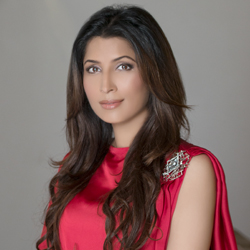
Vaneeza Ahmad

Vaneeza Ahmad

Model & Actor
Salima Hashmi

Salima Hashmi

Artist, Curator, Contemporary Art Historian
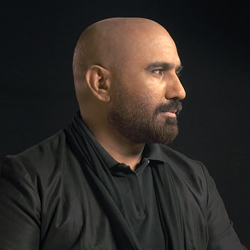
Rashid Rana

Rashid Rana

Leading Artist & Dean, School of Visual Arts & Design, BNU
Mehmal Sarfraz

Mehmal Sarfraz

Journalist & Co-founder, The Current
Afshan Khalid

Afshan Khalid

Educationist and Head of School Evaluation, Beaconhouse
Baela Jamil

Baela Jamil

CEO, Idara-e-Taleem-o-Aagahi (ITA)
Dr Taimur Rahman

Dr Taimur Rahman

Associate Professor, Political Science, LUMS
Yousuf Kerai

Yousuf Kerai

Musician & Associate Professor, Habib University
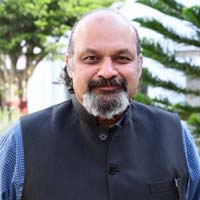
Dr Faisal Bari

Dr Faisal Bari

CEO & Sr. Research Fellow, Institute of Dev. and Economic Alternatives
Iqbal Z. Ahmed

Iqbal Z. Ahmed

Businessman and Philanthropist; Chairman Associated Group
Arif Iqbal

Arif Iqbal

CEO, LAAM, former Engineering Manager Facebook and Engineering Lead Printerest
Dr Mariam Chughtai

Dr Mariam Chughtai

Director, National Curriculum Council, Federal Ministry of Education
Kamran Lashari

Kamran Lashari

Director General, Walled City Lahore Authority
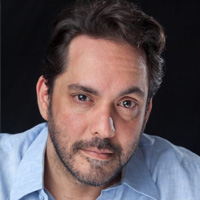
Isfundiar Kasuri

Isfundiar Kasuri

CEO, NewGlobe
Rishm Najm

Rishm Najm

Educationist, Curriculum Developer and Professional Development Expert, Lahore Grammar School
Aisha Amir Ahmed

Aisha Amir Ahmed

Educator, Founder & Lead Consultant, Amaltas Education
Arshad Saeed Husain

Arshad Saeed Husain

Managing Director, Oxford University Press
Dr Faisal Mushtaq TI

Dr Faisal Mushtaq TI

Founder & Chairman, Roots Millennium Education
Sadaf Rehman

Sadaf Rehman

Co-founder Codeschool, Pakistan
Nazish Brohi

Nazish Brohi

Social Sector Consultant and Activist
Iain Riley

Iain Riley

Head of School, TNS Beaconhouse DHA
Khalid Malik

Khalid Malik

Radio Jockey, Actor & Mentor
Suzie Boss

Suzie Boss

Writer, Educationist and a PBLExpert
Dr Athar Osama

Dr Athar Osama

Founder & CEO, LITE Lab and STEMx

Professor Dr Ger Graus OBE

Professor Dr Ger Graus OBE

Global Education Director, KidZania
Dr Bo Stjerne Thomsen

Dr Bo Stjerne Thomsen

Chair, Learning through Play, LEGO Foundation
Taimur K. Bandey

Taimur K. Bandey

Educationist and International Baccalaureate Expert
Raum Saleem

Raum Saleem

Manager Professional Development and School Improvement, Beaconhouse
Ayesha Mirza

Ayesha Mirza

Educationist, Female Rights Activist, and Former Debater
Kyle Wagner

Kyle Wagner

Educationist and PBL Expert, Founder, Transform Educational Consulting Limited
Attiya Noon

Attiya Noon

Regional Director, The City School
Sabina Khatri

Sabina Khatri

Founder & Chairperson, Kiran Foundation
Hamza Farrukh

Hamza Farrukh

Founder & President, Bondh E Shams and Vice President, Goldman Sachs
James M. Dorsey

James M. Dorsey

Award-winning journalist and scholar
Aliya Agha

Aliya Agha

CEO, Margalla Tribune
Ammar Ali Jan

Ammar Ali Jan

Acitivst, Historian, and Author
Ammar Aziz

Ammar Aziz

Poet, Literary Translator, and Filmmaker
Ammar Baig

Ammar Baig

Singer & Musician
Ammar Bilal

Ammar Bilal

IB DP Student - Beaconhouse College Programme
Asim Chohan

Asim Chohan

Senior Vice President, Morgan Stanley
Asma Shah

Asma Shah

Social Impact Entrepreneur & Founder, GoFlour Bakery & Training Centre
Ayesha Hasan

Ayesha Hasan

Founder & CEO, Dream 3
Charles Barker

Charles Barker

Chairman & CEO Hospitality Support & Consultancy Services - HSCS
Kanwal Malik

Kanwal Malik

DGM, Education Operations, Beaconhouse
Alishaba Naeem

Alishaba Naeem

A Level Student, Beaconhouse Liberty Campus, Lahore
Florian Ciprian

Florian Ciprian

Senior IBWS Manager, International Baccalaureate
Abdul Hadi Khan

Abdul Hadi Khan

Student, Sanjan Nagar Public Education Trust School
Cemil Cihan Ozalevli

Cemil Cihan Ozalevli

Co-founder and Chief Content Officer, Twin Science & Robotics
Dr Masood Arshad

Dr Masood Arshad

Senior Director - Footprint, WWF-Pakistan
Dr Randy Hatfield

Dr Randy Hatfield

Chief of Party, USAID Teacher Excellence Initiative
Humayun Bashir Tarar

Humayun Bashir Tarar

Additional Inspector General
Mark Barber

Mark Barber

Head, Qualifications & Partnerships, OxfordAQA International Qualifications
Amir Jahangir

Amir Jahangir

Chair, Global Dignity; Pakistan and CEO, Mishal Pvt. Ltd.
Sanne Kanis

Sanne Kanis

Founder & CEO, Abel
Dr Naeem Zafar

Dr Naeem Zafar

Pediatrician
Dr Peter Kalmus

Dr Peter Kalmus

Climate Scientist, NASA Jet Propulsion Laboratory and Founder, Climate Ad Project
Jazib Zahir

Jazib Zahir

Director, LUMSx & LUMS Centre for Entrepreneurship
Jenny Lewis

Jenny Lewis

International Consultant & Leadership Coach
Rania Amaireh

Rania Amaireh

Principal, Beaconhouse Al-Khaleej School, UAE
Rob Jamieson

Rob Jamieson

Head, International Channels & Partnerships, Pearson Schools Qualifications
Salman Alvi

Salman Alvi

Ghazal and Semi-classical Vocalist
Farah Irfan Ahmad

Farah Irfan Ahmad

Wellness Expert & Nutritherapist
Sean Covey

Sean Covey

Business Executive, Author and Speaker, President FranklinCovey Education
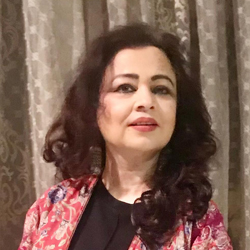
Shaiyanne Malik

Shaiyanne Malik

Social Entrepreneur, Trainer & Fashion Designer
Dr Ammar Malik

Dr Ammar Malik

Senior Research Scientist, AidData, The College of William & Mary
Dr Sara Baker

Dr Sara Baker

Professor of Developmental Psychology and Principal Investigator at the Centre for Research on PEDAL
Chen Ziyang

Chen Ziyang

Student, IB DP, TNS Beaconhouse
Asfandyar Khan

Asfandyar Khan

Performance Artist and Actor
Farid Haque

Farid Haque

Co-founder, Erly Stage Studios

Daniel Sobel

Daniel Sobel

Founder, International Forums of Inclusion Practitioners
Dr Abdul Hameed

Dr Abdul Hameed

Inclusion and Disability Expert
Janita Andersen

Janita Andersen

Coach , Consultant, and Director, International Higher Education, FranklinCovey
Jeffrey Archer

Jeffrey Archer

Bestselling Author, Member House of Lords, and Former Member, House of Commons
Nina Adlan Disney

Nina Adlan Disney

Executive Director, LeapEd Services
Zufishan Anushay

Zufishan Anushay

Founder, JFK Animal Rescue and Shelter
Annamarie Hassall

Annamarie Hassall

Chief Executive, National Association for Special Educational Needs and Disabilities, UK
Hassan Mujtaba Zaidi

Hassan Mujtaba Zaidi

Founder and Executive Director, Discovering New Artists (DNA)
Dr Mujtaba Piracha

Dr Mujtaba Piracha

Ambassador of Pakistan to the World Trade Organisation (WTO)
Penny Tassoni MBE

Penny Tassoni MBE

Educationist, Author, and Trainer
Ron Berger

Ron Berger

Renowned Author & Educationist Fmr. Professor, Harvard Graduate School of Education
Shanza Khan

Shanza Khan

Social Development Specialist; Founder & Head Counselor, Eye on Ivy
Tayseer Ali

Tayseer Ali

Co-founder & Chief Financial Officer, SadaPay
Tauseef Lateef

Tauseef Lateef

Public-private Partnership Specialist (Education)
Uzma Noorani

Uzma Noorani

Social Activist and Former Co-chairperson, Human Rights Commission of Pakistan
Dr Shehzad Jeeva

Dr Shehzad Jeeva

CEO, Aga Khan University Examination Board
Tofiq Pasha

Tofiq Pasha

Environmentalist and Landscape Designer
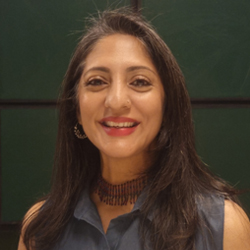
Tazeen Hussain

Tazeen Hussain

Actor, Associate Professor, Habib University & Founder, The Karachi Collective
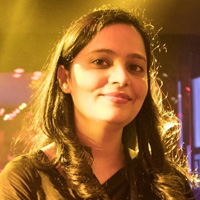
Zahra Sabri

Zahra Sabri

Lecturer, Habib University
Rayan Khalid

Rayan Khalid

IBDP Student, Beaconhouse College Programme
Shahid Nadeem Khan

Shahid Nadeem Khan

Director, Playwright, and Executive Director, Ajoka Theatre
Colin Marson

Colin Marson

Director, Google for Education, JAPAC
Syma Arshad

Syma Arshad

Entrepreneur and Digitalization & Transformational Leader
Dr Leeanne Wootten

Dr Leeanne Wootten

Head, Beaconhouse Newlands Islamabad
Bina Jawwad

Bina Jawwad

Kathak Performer, Co-founder "Harsukh"
Dr Aqdas Afzal

Dr Aqdas Afzal

Programme Director, Social Development & Policy Programme, Habib University
Ayesha Taslim

Ayesha Taslim

Programme Director, Depilex Smileagain Foundation
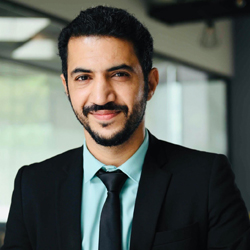
Sikander Bizenjo

Sikander Bizenjo

Dev. Economist & External Engagements Mng., Engro & Co-founder Balochistan Youth Action Comm.
Mahlaqa Shaukat

Mahlaqa Shaukat

CEO & Founder, Aimfit
Furquan Kidwai

Furquan Kidwai

Founder & CEO, Dawaai, Pakistan
Dr Fernando Reimers

Dr Fernando Reimers

Professor, Ford Foundation and Director, Global Education Innovation Initiative, Harvard University
Hina Hafeezullah

Hina Hafeezullah

Advocate, Supreme Court of Pakistan; Co-chair of the Judicial Water & Environment Commission
Mariyam Farooq

Mariyam Farooq

A Level Student, Beaconhouse College Programme
Sahar Basit

Sahar Basit

Teacher, TNS Beaconhouse
Sirajuddin Aziz

Sirajuddin Aziz

Writer and Former CEO Financial Institutions, Habib Bank AG Zurich
Vardah Aziz

Vardah Aziz

Actor, Costume Designer, and Model
Zia Khan

Zia Khan

CEO, Panacloud
Dr Mohammad Khurram

Dr Mohammad Khurram

Professor, NED University of Engineering & Technology, Karachi
Maheen Gul Malik

Maheen Gul Malik

Lawyer and Founder, Lahore Autism Centre
Hawa Hameed

Hawa Hameed

A Level Student, Beaconhouse College Programme
Gill Brackenbury

Gill Brackenbury

Director, UCL Centre for Inclusive Education, UK
Wajahat Malik

Wajahat Malik

Documentary Filmmaker, Producer, and TV Presenter
Sajjad Parmar

Sajjad Parmar

Founder & CEO, The Talent Accelerator
Ehsan Bhutta

Ehsan Bhutta

Secretary Sports, Punjab
Maliha Noman

Maliha Noman

Headmistress, Beaconhouse Gulshan Middle, Karachi
Mishma Wasti

Mishma Wasti

IBDP Student, Beaconhouse College Programme
Kamran Jawaid

Kamran Jawaid

Resident Film Critic, Dawn Media Group
Muhammad Noor-ul-Hassan

Muhammad Noor-ul-Hassan

Actor & TV Presenter
Ali Xeeshan

Ali Xeeshan

CEO & Creative Director, Ali Xeeshan Theatre Studio
Eman Zahid

Eman Zahid

A Level Student, Beaconhouse College Programme
Ayesha Tauqeer

Ayesha Tauqeer

IB DP Student, Beaconhouse College Programme
Deborah Henry

Deborah Henry

Miss Universe Malaysia 2011 & Miss World Malaysia 2007
Dr Agha Ali Raza

Dr Agha Ali Raza

Founding Director, Centre for Speech and Language Technologies
Maryam Munir

Maryam Munir

Parent Educator and Therapist
Roshnan Ali

Roshnan Ali

Football Player and Artist
Bilquis Mir

Bilquis Mir

IBDP Student, TNS Beaconhouse
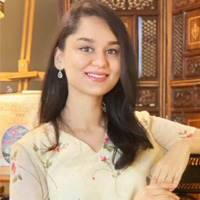
Shanzay Subzwari

Shanzay Subzwari

Visual Artist, Illustrator & Host
Shae Gill

Shae Gill

Singer
Sana Talat

Sana Talat

Deputy Manager Professional Development and School Improvement, Beaconhouse
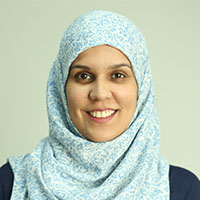
Dr Maryam Mustafa

Dr Maryam Mustafa

Associate Professor & Director, Saida Waheed Gender Centre, LUMS
Samina Baig

Samina Baig

High-altitude Mountaineer
Irum Mumtaz

Irum Mumtaz

MD, Institute of Dyslexia, Education & Attitudinal Studies (IDEAS)
Dr Hadia Majid

Dr Hadia Majid

Chair, Department of Economics, LUMS
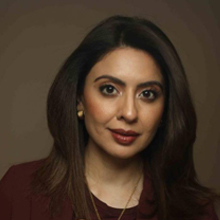
Sidra Iqbal

Sidra Iqbal

Journalist & TV Host
Younas Alam

Younas Alam

Senior Manager Operations and Projects, Homebridge
Sal Gordon

Sal Gordon

Principal, Teaching and Learning, Green School Bali
Sara Hayat

Sara Hayat

Lawyer & Climate Activist
Hana Tariq

Hana Tariq

Educational Consultant
Romeena Kureishy

Romeena Kureishy

Urdu Pedagogy Specialist
Sami Fathi

Sami Fathi

Famine and Food Waste Activist, Journalist, and News Editor
Shamshad Ahmad

Shamshad Ahmad

Former Foreign Secretary, Pakistan
Dr Fazilda Nabeel

Dr Fazilda Nabeel

Provincial Coordinator, Living Indus Initiative (United Nations)
Ali Irshad Chattha

Ali Irshad Chattha

Educationalist & Policy Analyst, Pakistan Olympic Association
Hammad Chaudhry

Hammad Chaudhry

CEO HKC Entertainment
Syed Ali Zafar

Syed Ali Zafar

Senator, Chairman of the Senate Standing Committee on Law & Justice, and Barrister
F.S. Aijazuddin

F.S. Aijazuddin

Art-historian and Author
Dr Faisal Khan

Dr Faisal Khan

Biologist and Entrepreneur
Dr Zia Hashmi

Dr Zia Hashmi

Section Head, Water Resources and Glaciology, GCISC
Azhar Ali

Azhar Ali

Cricketer
Faizan Siddiqui

Faizan Siddiqui

Head, Marketing and Digital, Syngenta Pakistan
Omer Chaudry

Omer Chaudry

Fashion Retail Expert, Managing Partner, Recon
Babar Bhatti

Babar Bhatti

Director, Green Earth Recycling
Saad Rasool

Saad Rasool

Lawyer & Writer
Haider Azhar

Haider Azhar

Chief Operating Officer, Multan Sultans
Risham Waseem

Risham Waseem

Programmes Director, Interactive Resource Centre
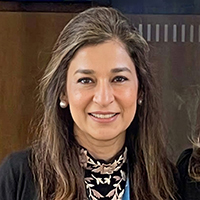
Ayesha Raza Farooq

Ayesha Raza Farooq

Chairperson, National Commission on the Rights of Child (NCRC)
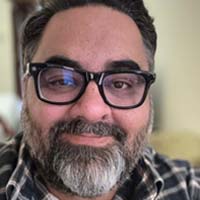
Fasi Zaka

Fasi Zaka

Public Policy Specialist & Columnist
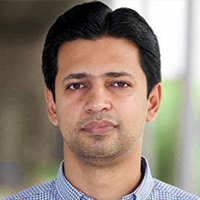
Badar Khushnood

Badar Khushnood

Co-Founder, Bramerz & Fishry.com
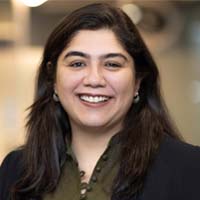
Khadija S Bakhtiar

Khadija S Bakhtiar

CEO & Founder,Teach For Pakistan
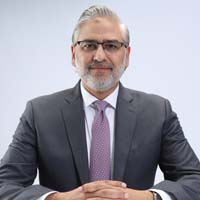
Ali Ahmad Khan

Ali Ahmad Khan

Chief Operating Officer, Beaconhouse
Moneeza Butt

Moneeza Butt

Partner, KPMG Pakistan
Shahnaz Minallah

Shahnaz Minallah

Life Coach of Mindfulness and Self-mastery
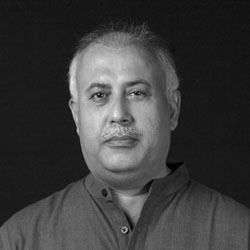
Wusat Ullah Khan

Wusat Ullah Khan

Journalist & Co-host

Our Partners .

Lead Sponsor

Gold Sponsor

Bronze Sponsors

SOT Partners